
Readict Fiction
VitalTek, Inc.Books & Reference
4.7123.00 Reviews
- Version
- 5.9.1
- Installs
- 50.00K
- Age Rating
- Mature 17+
Screenshots

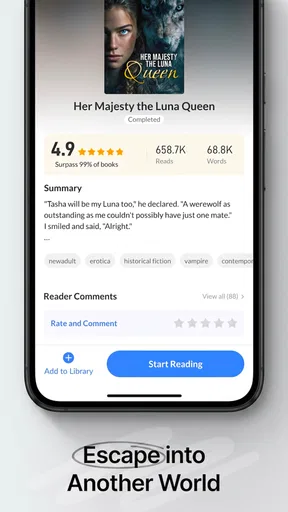
Our Review of Readict Fiction
 Analysis by Appyee
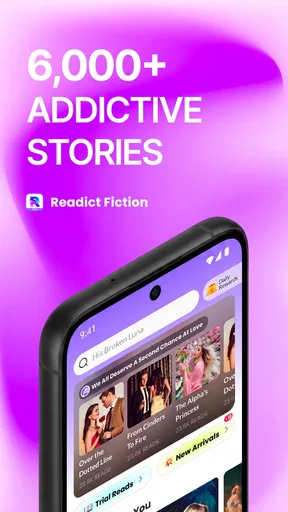
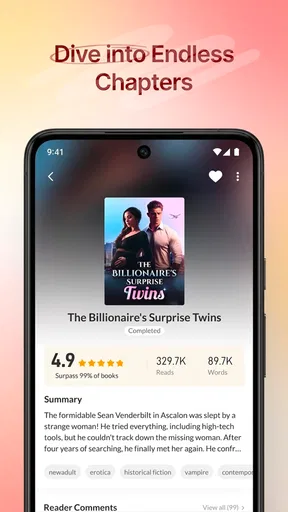
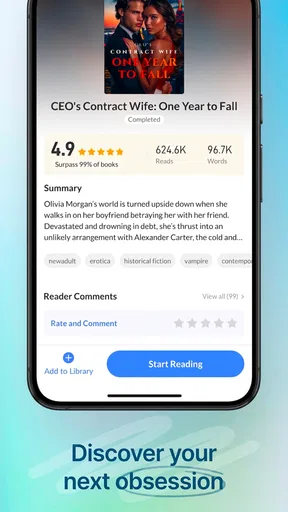
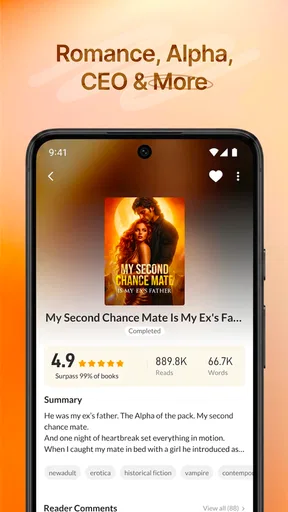
I approached Readict Fiction as a reading app rather than as a full digital library replacement. Its purpose is straightforward: give me a broad selection of fiction novels to read online, with the convenience of opening a story whenever I have a spare moment. That makes it especially appealing for casual readers who enjoy discovering unfamiliar authors and genres without committing to a single book before they know whether it will hold their attention.
What stood out to me first was the low-friction idea behind it. I can imagine using it during a commute, while waiting for an appointment, or at the end of the day when I want something lighter than a news feed. The app is free to download, although in-app purchases range from $0.49 to $34.99 per item. That combination makes it easy to try, but it also means I would pay attention to how much of my reading remains comfortable without spending money.
Readict Fiction sits in the Books & Reference category and comes from VitalTek, Inc. It has built a strong public reception, with a 4.7 average from around 662 ratings and 123 reviews. Those figures suggest that many readers find the basic experience worthwhile, but they do not remove the need to consider the practical details: how quickly a story opens, how the app behaves during long sessions, and whether its reading model suits the way I prefer to consume books.
How Readict Fiction feels during real reading sessions
I judge Readict Fiction less by the promise of a large fiction selection than by the trust a reader needs to settle into a story. In this section, I look at how its online reading model shapes everyday sessions and what I would check before relying on it away from home. That context matters because convenience is only useful when it fits the way I read.
Speed expectations when opening a story
The most important performance question for a fiction reader is not raw technical speed. It is whether I can move from wanting to read to actually reading without unnecessary interruption. Readict Fiction is designed around online reading, so the quality of the experience naturally depends on the connection available when I open a novel or move through its content. On a dependable network, I would expect the main benefit to be immediacy: choose a story, begin reading, and avoid the preparation involved in finding a separate ebook file.
That convenience is useful in short sessions. If I have only ten minutes, I do not want to spend most of that time organizing a library or deciding which format to download. A fiction-focused catalog can make browsing feel more purposeful than opening a general reading app filled with documents, textbooks, and unrelated material. The trade-off is that online access is central to the concept. Someone who regularly reads in places with weak connectivity may prefer a service or reader built around dependable offline access.
I also see a difference between perceived speed and actual speed. A reading app can feel quick when its text is easy to reach, even if browsing through a large catalog takes more patience. Conversely, a technically responsive interface can still feel slow if I have to make too many decisions before reaching the next chapter. My advice is to judge Readict Fiction by the complete path from discovery to reading, not just by how quickly an individual screen appears.
For a new user, the best early test is simple: open several different stories, read beyond the first page, and return to the catalog before deciding whether the app fits. That small routine reveals more than a single successful launch. It shows whether browsing feels comfortable, whether switching between stories is practical, and whether the app supports the spontaneous reading habit it promises in everyday use.
What happens during heavier reading use
Long sessions are where a reading app earns my trust. A short sample can look fine, but a reader may spend an hour or more moving through chapters, pausing, returning, and changing stories. In that situation, the important qualities are consistency and comfort. I want text to remain easy to follow, controls not to get in the way, and the app to avoid making me feel that I am managing software instead of reading a novel.
Readict Fiction is more convincing for people who enjoy serialized or exploratory reading than for readers who already have a fixed list of books and want the most controlled possible reading environment. Its collection-based approach encourages browsing, which can be a strength when I am unsure what I want. It can also become a distraction. I may begin one story, notice another interesting title, and spend more time choosing than reading.
A useful workflow is to treat the app as a discovery shelf. I would select one story for a focused session, keep a second option in mind for a change of mood, and resist opening several at once. This reduces the mental clutter that can come from a large fiction selection. It also makes it easier to decide whether I genuinely enjoy a story rather than judging it against a constant stream of alternatives.
Heavy use also brings the question of device resources. I would not describe a reading app as automatically demanding simply because it contains many novels, but online content and extended screen time can still affect the overall experience. On an older phone, I would close unused apps before a long session and keep the system reasonably clear. That is not a special requirement unique to Readict Fiction; it is a sensible habit when using any content-heavy mobile app for extended periods.
The Mature 17+ content rating matters here. I would not install this for a child or hand over the phone assuming that a fiction catalog is automatically family-friendly. The age guidance is a practical part of deciding who should use it, especially in a shared-device household. Adults who are comfortable with mature fiction are the natural audience, while families seeking children’s reading material should look elsewhere.
Reliability and recovering from interruptions
Reliability for an online reading app means more than avoiding crashes. It includes recovering gracefully when I leave the app, lose connectivity, receive a call, or return after a break. A reader should not have to reconstruct where a story ended every time a session is interrupted. Since Readict Fiction is intended for reading on the go, this recovery question is particularly important for commuters and people who read in short bursts.
My practical recommendation is to build a small recovery check into the first day of use. Start a story, leave the app for another task, return later, and see whether the reading flow still feels natural. Then repeat the test after switching to another story. This is more useful than relying on a single uninterrupted session because it mirrors how most people actually read on a phone.
Network changes deserve the same attention. A story that opens smoothly at home may behave differently when I move between Wi-Fi and mobile data. I would avoid assuming that every chapter or reading state is available in exactly the same way without a connection. Before taking the app on a flight, into a rural area, or somewhere with expensive mobile data, I would test the intended reading material in advance and confirm that the experience matches my needs.
There is also a broader reliability issue: online services can change how content is presented over time. That is normal for a connected reading platform, but it means Readict Fiction is less like owning a permanent ebook file and more like using a continuing reading service. Readers who value a stable personal archive, independent file management, or long-term control over purchased books may be more comfortable with a conventional ebook store or a dedicated document reader.
That distinction does not make Readict Fiction unreliable. It simply defines the type of reliability I expect from it. I would trust it for casual, ongoing fiction discovery, but I would not make it my only reading option for an important trip or for a personal library I need to preserve independently. Keeping another reading source available is sensible if uninterrupted access is essential.
Device constraints and compatibility
The app supports Android devices running version 6.0 or later, which covers a wide range of phones but does not include every very old device. Before installing, I would check the operating system rather than assuming that any Android phone can run it. This is particularly relevant if I am trying to revive an older handset as a dedicated reading device.
Screen size will shape the experience more than raw specifications. On a compact phone, frequent page movement may feel more tiring, especially during long novels. A larger display can make reading more relaxed, but it may also make the phone heavier to hold for extended periods. I would test the app in the position I actually use for reading: one-handed while standing, propped beside a bed, or held with both hands on a sofa.
Storage is another practical consideration, even for an app whose reading model is online. The application itself occupies device space, and the phone still needs enough room for normal system operation and other apps. I would not fill an older device to the limit before installing it. Keeping spare storage available generally helps any phone remain easier to maintain, particularly when several apps are updated or used regularly.
Battery expectations should also be realistic. Reading text is usually less visually intensive than streaming video or playing a demanding game, but a long session still keeps the screen active and may involve network activity. If I plan to read for hours away from a charger, I would lower screen brightness to a comfortable level and carry a power bank when necessary. These steps are simple, but they make a noticeable difference to a phone being used as a dedicated reading companion.
Readict Fiction is not the right choice for every device scenario. Someone with a very old Android phone, limited connectivity, a small screen, or strict data limits should test it cautiously. A lightweight offline ebook reader may be a better fit for that person, especially if they already own compatible books. On the other hand, a reader with a modern phone and reliable internet who enjoys finding new fiction has fewer reasons to worry about the basic device requirements.
Who benefits most from the reading model
I see the strongest match in readers who browse by mood. Perhaps I want a dramatic story one evening, a lighter romance the next, or simply something unfamiliar after finishing a book. A diverse fiction collection can reduce the effort of finding the next thing to read. The app is also useful for people who prefer reading in small pieces rather than planning a complete book session in advance.
It can work well for a commuter who has a regular train ride but does not always know how much time will be available. On a quiet morning, I might read several chapters. On a delayed connection, I could open the app and continue exploring. The value comes from having fiction available at the moment I want it, rather than from building a perfectly organized library.
It is less suitable for readers who want academic reference material, a narrowly curated literary collection, or complete control over files and ownership. The Books & Reference label should not lead anyone to expect a broad research tool. This is a fiction-oriented experience, and its appeal depends on wanting stories rather than textbooks, manuals, or a serious note-taking system.
I would also hesitate to recommend it to someone who dislikes in-app purchase systems on principle. The app is free, which lowers the barrier to trying it, but optional purchases from $0.49 to $34.99 per item can affect how a reader evaluates the overall value. Before spending, I would use the free experience long enough to decide whether the catalog, reading rhythm, and presentation genuinely fit my habits.
How it compares with familiar alternatives
Compared with a traditional ebook store, Readict Fiction feels more discovery-led. A conventional store is often better when I already know the exact title or author I want and want a clear purchase-and-keep relationship. Readict Fiction is more appealing when I want to browse a range of fiction and begin reading without treating every choice as a separate buying decision.
Compared with a general ebook reader, it is more focused. A general reader may handle personal files, public-domain books, documents, and books purchased from several sources. That flexibility is valuable for people with an established collection. Readict Fiction makes more sense for someone who wants the app itself to be the starting point for fiction rather than a neutral shelf for files obtained elsewhere.
Compared with a subscription reading service, the key question is not simply catalog size. I would compare how each service handles access, payment, reading continuity, and the kinds of stories I actually enjoy. Readict Fiction’s free entry point is attractive for experimentation, while a subscription can be better for readers who prefer a predictable payment model and a clearly defined library. Neither approach is universally superior; the better choice depends on whether I value casual discovery or structured access to known material.
There is also a difference from physical books. Paper offers dependable offline access, no battery concern, and a tactile reading experience. Readict Fiction offers portability and variety in one phone. For me, the app is a useful complement to physical reading rather than a complete replacement. I would use it when convenience matters most and choose print when I want a slower, more deliberate session without a screen.
Practical ways to get more from the app
My first tip is to judge stories by a meaningful sample rather than by a title alone. Fiction catalogs can encourage quick decisions based on a cover or short description, but the writing style becomes clearer after several pages. I would give a promising story enough time to establish its voice, then move on without feeling obligated to finish something that does not suit me.
My second tip is to separate browsing sessions from reading sessions. When I have plenty of time, I can explore the collection and identify possibilities. When I have only a few minutes, I should open the story I already chose. This small distinction prevents the catalog from consuming the time I intended to spend reading.
My third tip is to test the app under the conditions that matter most to me before paying for anything. If I normally read on mobile data, I would use it that way. If I read at night, I would assess comfort with the screen at low brightness. If I frequently switch between tasks, I would test how naturally I can return to a story. These checks reveal whether the app fits my routine, not just whether it looks appealing during a first launch.
I would also keep expectations clear around purchases. The free installation makes exploration easy, but I would not assume that every part of the reading journey will have the same value for every reader. A sensible approach is to identify what I enjoy, note where the app begins asking for payment, and decide whether that cost feels reasonable before committing. That keeps the decision based on my reading habits rather than on the excitement of finding a new story.
My performance verdict and final recommendation
After considering the way Readict Fiction is meant to be used, I see it as a convenient fiction companion for adults who enjoy online discovery. Its strongest quality is not a complicated feature set; it is the combination of a focused fiction purpose, a free starting point, and the ability to turn spare moments into reading time. The public response, including a 4.7 average and more than 50K installs, supports the impression that it has found a receptive audience.
The current version is 5.9.1, and the app has been available since Aug 10, 2020. Those details give it a longer presence than a brand-new experiment, while the Android 6.0 minimum keeps it accessible to many existing devices. Still, compatibility alone does not guarantee a perfect experience on every phone. Connection quality, screen comfort, battery condition, and available storage will shape how dependable it feels in daily use.
My bottom line is that Readict Fiction is best when convenience and discovery matter more than permanent ownership or offline certainty. I would recommend it to an adult reader who likes sampling fiction, reads in short bursts, and has reliable internet. I would point a child, a strict offline reader, or someone seeking academic reference books toward a different option.
For my own routine, I would keep it as a flexible second reading source: something to open when I want a new story quickly, while using a traditional ebook reader or physical book when I need guaranteed access and a more controlled library. That is a balanced role, but it is a useful one. If your reading life is built around curiosity, spare minutes, and online fiction, Readict Fiction is worth trying before deciding whether its purchase model and connected approach belong in your regular rotation.
Verdict
Strengths of Readict Fiction
- Large catalog of romance, fantasy, and other serialized fiction
- Personalized recommendations help discover stories quickly
- Offline reading supports entertainment without a constant connection
- Simple interface makes chapters easy to browse and read
- Frequent updates provide new chapters and ongoing stories
Limitations of Readict Fiction
- Some stories may contain ads or require coins to unlock chapters
- Story quality can vary because much of the content is user-generated
- New chapters may arrive slowly or stop before a story is finished
- Offline access may be limited for certain books or chapters
- The app may collect reading and device data for personalization
Other Releases by VitalTek, Inc.
View All
Readict -One Click Away Novels
Books & Reference4.6

Fictify: Romace Novels&Stories
Books & Reference4.7
Similar Picks in This Category
View All
Google Play Books & Audiobooks
Google LLC4.7

네이버 - NAVER
NAVER Corp.3.5

Wattpad - Read & Write Stories
Wattpad.com3.7

King James Bible - Verse+Audio
Ozion4.8

Bible Offline-KJV Holy Bible
Bíblia Offline4.9

Amazon Kindle: Reading App
Amazon Mobile LLC4.8
Frequently Asked Questions
What is Readict Fiction, and what kind of stories can I read there?
Readict Fiction is a mobile reading platform focused mainly on serialized fiction and digital novels. Its catalog generally includes romance, fantasy, drama, mystery, science fiction, and other popular genres. Stories are usually divided into short chapters, making them convenient to read during breaks. The available titles, chapter access rules, and recommendations may change over time as the platform updates its library.
Is Readict Fiction free to download and use?
Readict Fiction can typically be downloaded without paying an upfront fee, but that does not necessarily mean every story or chapter is completely free. Some content may be available through daily rewards, advertisements, virtual coins, subscriptions, or other in-app purchase options. Before spending money, check the chapter unlock screen and the current pricing information shown in the app, since access conditions may vary by title and region.
Does Readict Fiction require an internet connection to read novels?
An internet connection is generally needed to browse the catalog, sign in, synchronize your reading progress, load new chapters, and process purchases or rewards. Depending on the version of the app and the specific title, some chapters may be cached or available for offline reading after they have been opened. However, offline access should not be assumed for the entire library, so download chapters while connected if the app provides that option.
Can I save my reading progress and continue on another device?
Readict Fiction may save reading progress through an account or the sign-in method supported by the application. This can help you continue a novel after changing phones or reinstalling the app, but synchronization depends on using the same account and having a working internet connection. It is worth checking your profile and account settings before investing significant time in a story, especially if you normally read across multiple devices.
Are there advertisements, in-app purchases, or age restrictions in Readict Fiction?
The app may include advertising, virtual currency, paid chapter unlocks, subscriptions, or other optional purchases, depending on the market and the story being read. Some novels can also contain mature themes, romantic situations, violence, or language that may not be suitable for younger readers. Review the app-store age rating and the individual story description, and use parental controls or purchase restrictions when necessary.
